What to Know
Indoor cycling can look simple and repetitive from the outside. Yet force direction, joint position and contact points change throughout every pedal turn. Discussing technique with Gizem Köymen does not mean making everyone look identical. Pedal mechanics are about understanding how the foot, bike and whole riding position work together.
Not every pedal force contributes equally to rotation
The turning effect on the crank depends on the component of force that contributes to rotation and on the crank's position. Pressing hard does not generate the same turning effect at every point in the cycle. As the pedal changes position, the relationship between the direction of the applied force and the direction of movement changes too.
This does not mean that the rider must produce a perfectly even circle of force. Force distribution naturally varies around the pedal stroke. Actively pulling upward throughout the cycle is not automatically more efficient or appropriate for everyone. Footwear and pedal attachment also matter. An instructor can translate these mechanical ideas into observations that are useful during an actual class.
Hip, knee and foot alignment must be observed in motion
The relationship between knee and foot cannot be fully assessed from one still image. Hip structure, limb proportions, available movement and pedal position all affect how riding looks. Every knee should not be expected to follow an identical visible path. Personal differences are not automatically errors; control and comfort provide context.
A sudden inward or outward knee movement may prompt questions about increasing load, fatigue or foot contact. It should not be assumed to have one cause. Similar observations can have different explanations for different riders. Rather than forcing the knee onto a predetermined line, discuss bike setup, resistance and foot contact with the instructor.
The ankle need not remain locked at one angle
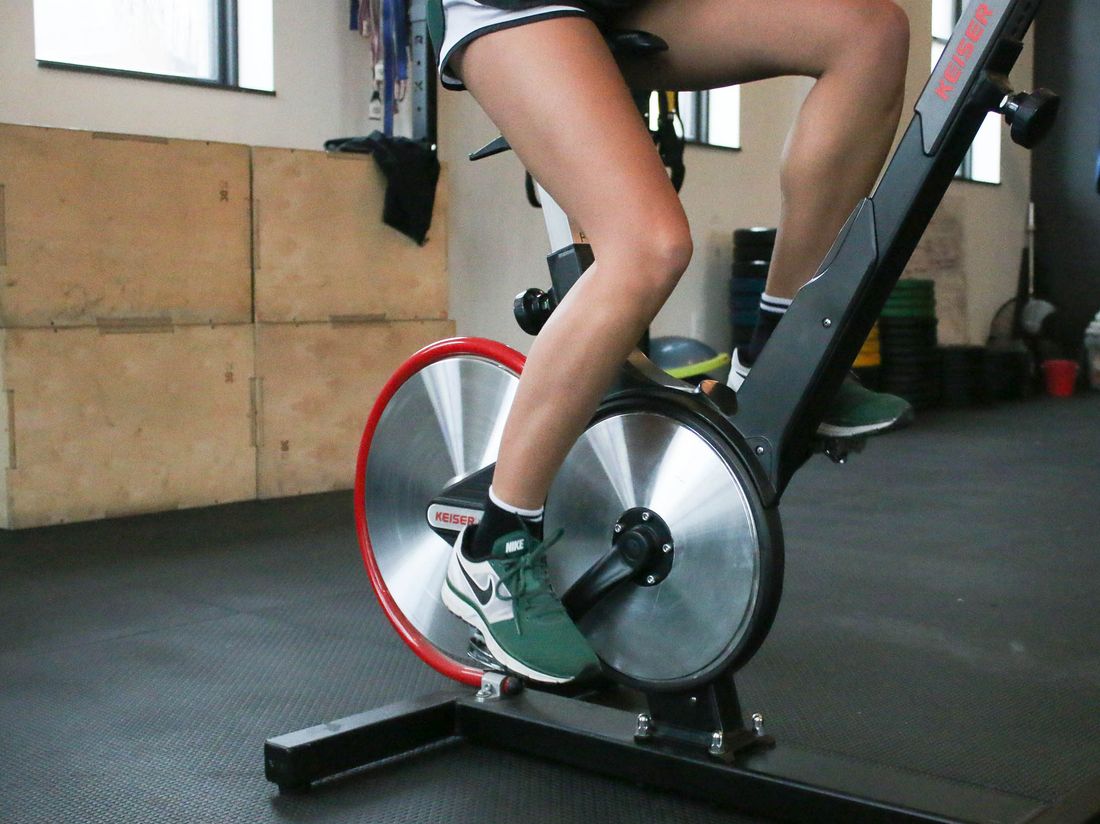
Some ankle movement can occur during a pedal revolution. Keeping the heel permanently pressed down, or riding continually on the toes, is not a universal technique. Footwear, contact with the pedal and riding position influence this movement. The aim is to maintain controlled contact rather than immobilise a joint to achieve a particular appearance.
A foot that slides on the pedal or repeatedly shifts inside a strap may make force transfer less reliable. Tightening a strap excessively is not a simple solution; it can create pressure and discomfort. Check shoe compatibility, strap closure and operation of the pedal system before class. With clip-in systems, understanding how to engage and release the shoe is particularly important.
Saddle position changes the context of force transfer
Saddle height and fore-aft position affect reaching the pedal and the joint positions used throughout the cycle. A feeling of overreaching accompanied by pelvic rocking, or feeling persistently cramped, can justify reviewing the setup. These observations do not establish one correct measurement. The bike's geometry and the rider's proportions need to be considered together.
Handlebar position belongs in the same discussion. Reaching too far may change hand pressure and the pelvis's relationship with the saddle. Adjusting only the lower leg can miss the upper body’s contribution. Small setup changes made with the instructor can make their effects easier to identify. Copying another person's saddle number cannot replace an individual setup discussion.
Seated and standing riding use different support relationships
During seated riding, the saddle supports part of the body's weight. Standing changes that support and may increase the need to organise the torso. The same resistance setting can therefore feel different in the two positions. Standing is not simply a more impressive version of sitting; it creates a different balance and load-management task.
Loading the handlebars heavily or making the whole torso rigid does not automatically improve pedal control. Hand contact provides support, but should not become a constant attempt to compensate for the legs' work through the arms. Position choice depends on the class purpose, the bike and the rider's control. Remaining standing is not, by itself, proof of a more advanced level.
Describe the observation before judging the appearance
Saying that the foot slips, the torso rocks during a transition or knee movement changes as resistance rises is more useful than simply declaring the technique wrong. These observations are not diagnoses. The conditions in which they occur matter, and setup questions can be discussed separately from changes that develop during the session.
Share your cycling experience and setup questions when enquiring about classes with Gizem Köymen. Unexpected pain, numbness or clear loss of control is a reason to stop forcing the movement and alert the instructor. This guide does not prescribe an individual riding posture. Its purpose is to make the relationships between joints, contact points and force transfer easier to understand.