What to Know
The rhythm of a spinning class can be motivating, but music should not decide every detail of the ride. Saddle setup, pedal speed and resistance are different variables that interact. This guide for Gizem Köymen explains what they mean and why they need consideration together.
Saddle height is a starting relationship
Saddle height affects how much the hips and knees move through the pedal cycle. A position that is too high may encourage reaching for the pedal or rocking through the pelvis. A very low position may demand greater hip and knee bending near the top of the cycle. These observations are not diagnoses. They are clues that the setup deserves another look in the context of the rider.
A measurement made beside the bike can provide a starting reference, but it cannot replace observation while pedalling. An instructor can consider the relationship between the pelvis, knees and feet during a manageable movement. Body proportions, previous experience and existing restrictions matter alongside leg length. A single universal saddle setting or knee angle overlooks these differences.
Reach and fore-aft position matter together
Moving the saddle forward or backward changes its relationship to both the pedals and handlebars. This should be considered with saddle height, since changing one adjustment may alter another relationship. Persistently raised shoulders or a strained reach can prompt reassessment.
Handlebar height and hand placement influence how the trunk is supported. Locked elbows or excessive pressure through the hands should not automatically be answered with a stronger grip. Setup, fatigue and resistance choice can all contribute. Bike mechanisms differ, so adjustment locks, pedal attachments and the emergency stopping system need to be understood through manufacturer guidance and an instructor's explanation before the workload increases.
Cadence describes pedal rotation
Cadence is the number of complete pedal revolutions per minute, commonly displayed as RPM. It does not directly describe travel speed: an indoor bike does not move along a road. Different resistance levels can be selected at the same cadence. Rotation rate alone therefore cannot fully explain mechanical work or perceived effort.
Music can help establish rhythm without requiring a pedal action on every beat. If a rider begins bouncing on the saddle or moving the trunk excessively to maintain the selected pace, the combination deserves reassessment. Faster cadence does not automatically mean better technique. A manageable rhythm should reflect the equipment and session purpose, rather than another participant's screen or the pressure to match a musical cue.
Resistance and the meaning of power
Resistance changes the load opposing pedal rotation. Mechanical power relates to rotational torque multiplied by angular velocity. Increasing resistance at a similar cadence can therefore increase power demand, while increasing cadence at a similar resistance also changes the task. A resistance number is not necessarily equivalent across bike models. Differences in mechanisms or calibration make direct numerical comparisons between machines unreliable.
Fast pedalling against a light load and slower pedalling against a heavier load can create different muscular and breathing demands. The important relationship includes whether resistance supports control and whether the chosen rhythm remains sustainable. Chasing the pedals or using large body movements to complete each rotation is information about the task, not simply evidence of insufficient motivation.
Seated and standing work change support
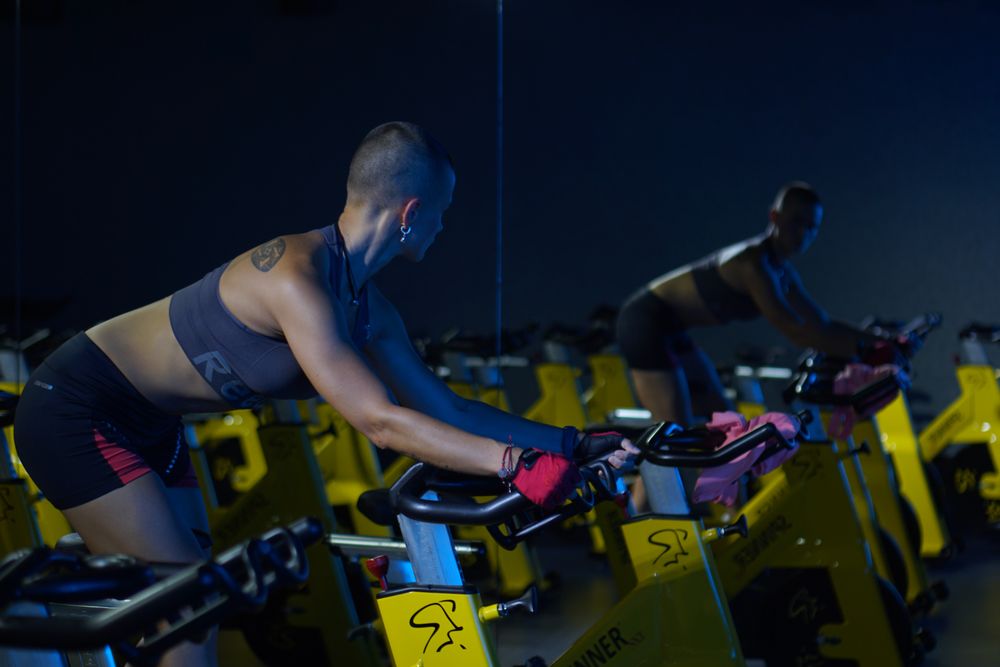
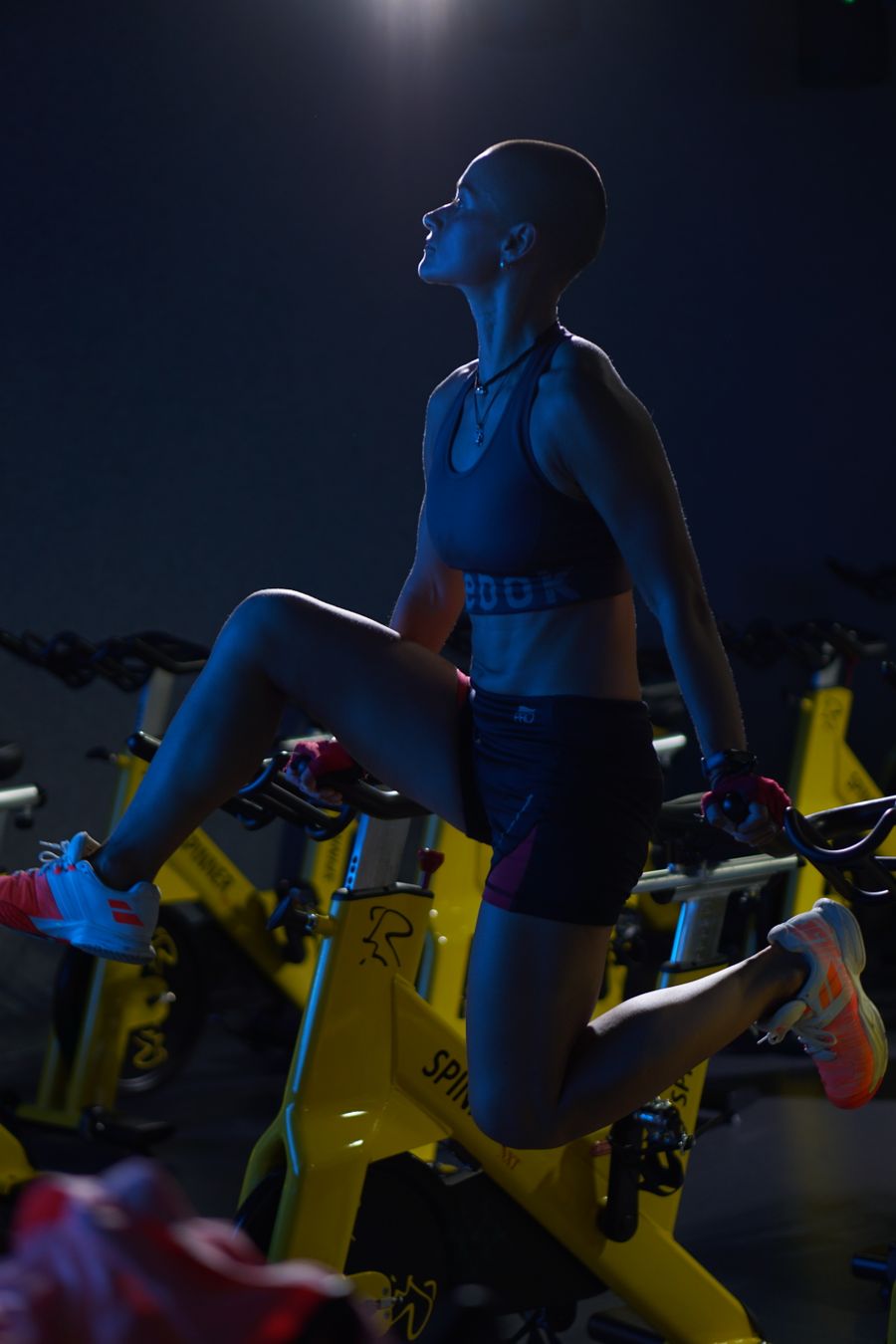
During seated pedalling, the saddle supports part of body weight. Standing changes the support relationship and increases the role of trunk organisation. It is therefore more than a change of appearance: combined with cadence and resistance, it creates a different movement task. Every participant does not need to stand during every section. Remaining seated can be an appropriate option rather than a lesser version of the class.
Breathing, perceived exertion and movement quality remain relevant in either position. Sharp knee or back pain, numbness or marked discomfort are not ordinary training effort. Chest pain, faintness or unexpectedly severe breathlessness require stopping and appropriate assistance. Known health restrictions may need individual professional advice before participation. A group's pace or an energetic atmosphere does not override those considerations.
Following the session more thoughtfully
Useful notes can include the bike model, settings that felt comfortable, combinations that reduced control and the overall effort experienced. These can be more informative than a calorie display alone. Sweat and musical energy do not independently identify an appropriate workload. The same person may experience a familiar combination differently after poor sleep, in a hotter room or when already fatigued.
A conversation with Gizem Köymen can focus on making the experience understandable rather than making everybody's numbers identical. Setup, manageable cadence and adjustable resistance work together. It is one in which the rider can recognise when to maintain the rhythm, change the task or pause, with the session's purpose remaining clear.
Further reading: [ACE: indoor cycling cadence and resistance](https://www.acefitness.org/continuing-education/certified/july-2018/7028/branch-out-with-cardio-equipment/).