What to Know
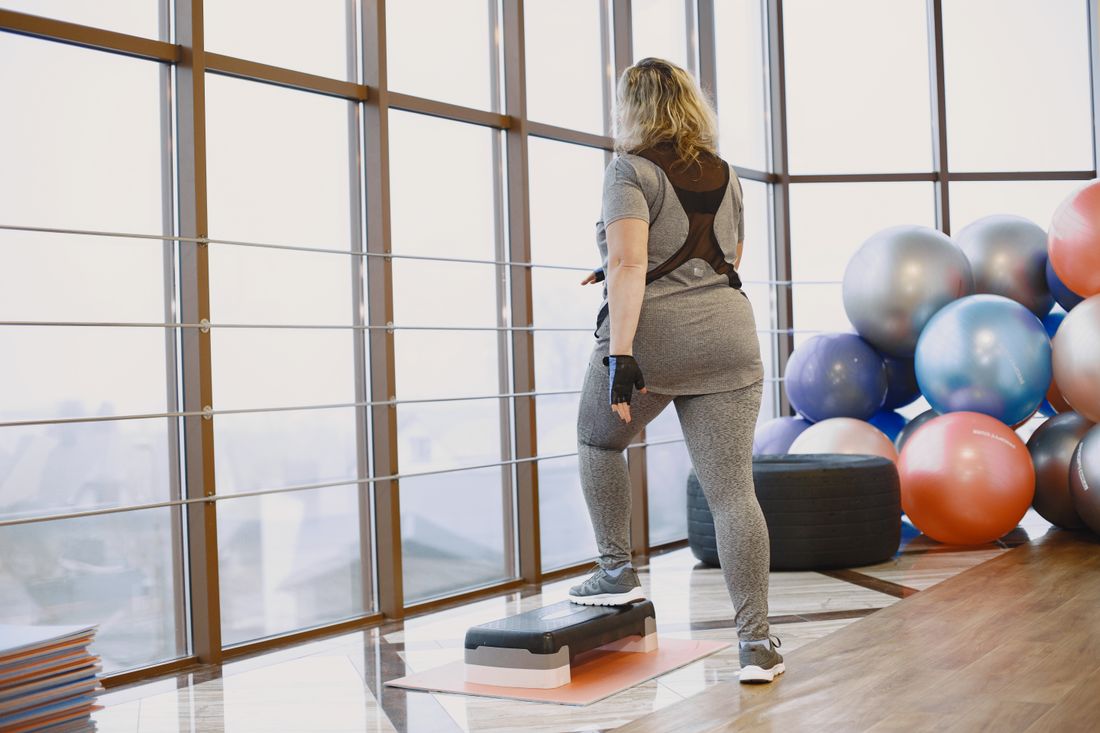
A step class may appear to move as one continuous flow. Underneath that flow are separate tasks: seeing the platform, choosing foot placement, transferring weight and recognising the next movement. This introduction from Gizem Köymen explains how those tasks connect with rhythm. The purpose is not to master complex choreography immediately, but to understand the foundations that make an instructor's guidance easier to follow.
Rhythm and sequence provide different information
Rhythm describes a pattern in time. Choreography describes which movement happens next. Someone may hear the musical beat clearly without knowing whether a foot should be on the floor or the platform at that moment. Matching timing to a movement sequence is a separate learning task, and separating the two can make early confusion more understandable.
In a simple four-count example, two foot placements onto the platform and two returning to the floor can occupy separate counts. Not every step pattern follows that example. What matters is understanding what each count represents. Learning a sequence at a manageable pace provides time to recognise its beginning and completion before speed or the number of movements increases.
Foot placement creates usable support
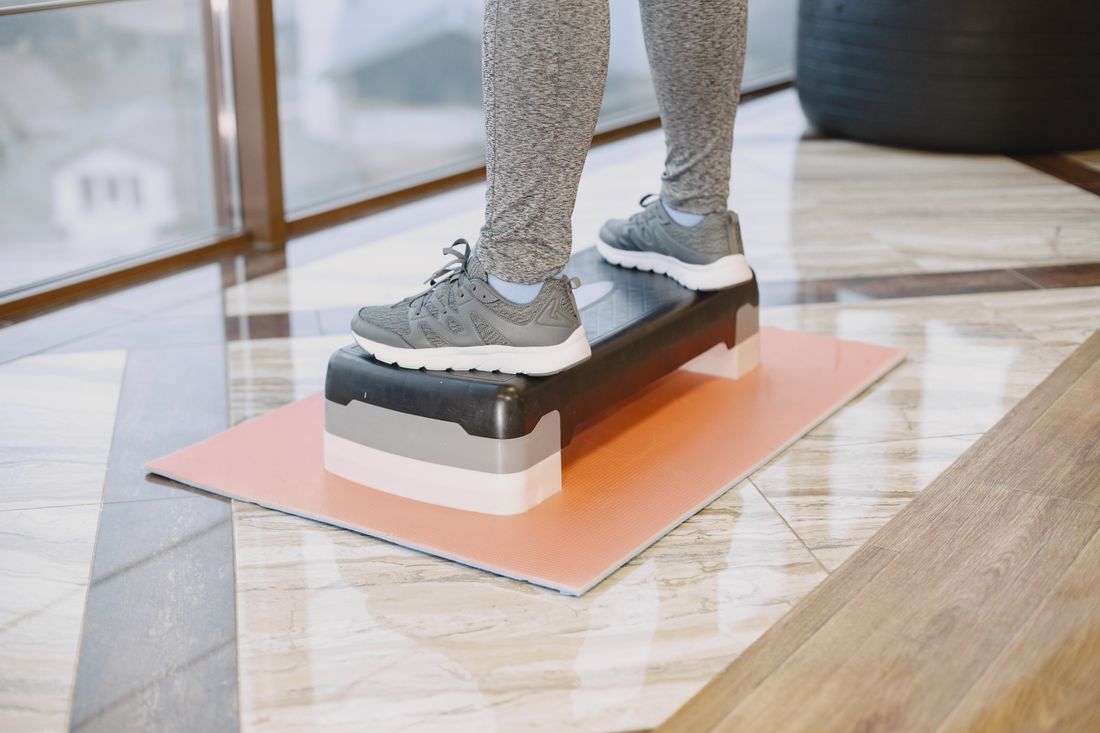
Platform contact should not be imagined as the toes merely touching an edge. The chosen movement needs an appropriate and predictable support area. Foot placement, distance from the edge and the body's position relative to the platform all matter. Reaching too far or standing too close changes the task.
Returning to the floor is part of the exercise too. If the destination of the foot is unclear, weight may move toward support that is not yet ready. Placement therefore deserves attention before speed. Footwear grip, floor condition and platform stability belong to preparation. Equipment that shifts or rocks should be addressed before continuing, rather than treated as a feature to overcome through greater concentration.
Contact and weight transfer are distinct
A foot touching a surface does not mean that all body weight has moved onto it. Establishing contact and transferring load are related but distinct events. In step aerobics, the platform foot is more than a marker. The ankle, knee and hip contribute as the body rises, while trunk position influences how the movement is organised. It is not simply a task of opening and closing the knee.
When learning a sequence, a participant might place the foot correctly while leaving the trunk behind, or move the trunk before establishing support. Smaller, manageable transitions can make the relationship clearer. The aim is not to stiffen the body, but to transfer weight within a time frame that can be followed.
The leading foot changes organisation
The leading foot begins a sequence. Starting a familiar pattern with the other foot can create a meaningful coordination change, even when the shape looks similar. The task must now be organised from the opposite side. Greater familiarity on one side does not automatically establish a strength difference or a health problem. Experience and understanding of the instruction deserve consideration first.
A lead change should be explained before it is required. Combining a new leading foot with an unfamiliar direction change can make the task harder to interpret. Changes can be understood separately before being combined. Losing the sequence also does not create an obligation to guess. Stopping appropriately and asking for another explanation are useful participation skills.
Arm movements add another layer
Adding the arms asks the upper and lower body to share timing. It is not a prerequisite for understanding the feet. A simple arm pattern can be introduced after the step sequence is recognisable, making the source of difficulty easier to identify. Arm range also relates to available space. In a group, awareness extends beyond one platform to neighbouring participants.
Visual information should help the movement rather than force attention permanently downward or toward one distant point. The instructor's demonstration, counting and advance cues provide complementary information. Timely guidance creates room to prepare for a transition. In this Gizem Köymen guide, coordination means understanding which information is useful at each moment, rather than performing every decorative addition.
Judge progress through clarity of movement
Progress includes more consistent placement, earlier recognition of transitions and the ability to return to a basic pattern. Faster music or a longer routine is not the only measure. Comparisons are more useful under reasonably similar conditions, with room for normal day-to-day variation.
Fatigue can change timing and step distance. Simplifying or pausing remains part of learning. Sharp pain, dizziness or unexpectedly marked breathlessness should not be treated as a rhythm mistake; activity should stop for appropriate assessment. A sound foundation combines hearing the music with understanding the relationship between body, platform and surrounding space.