What to Know
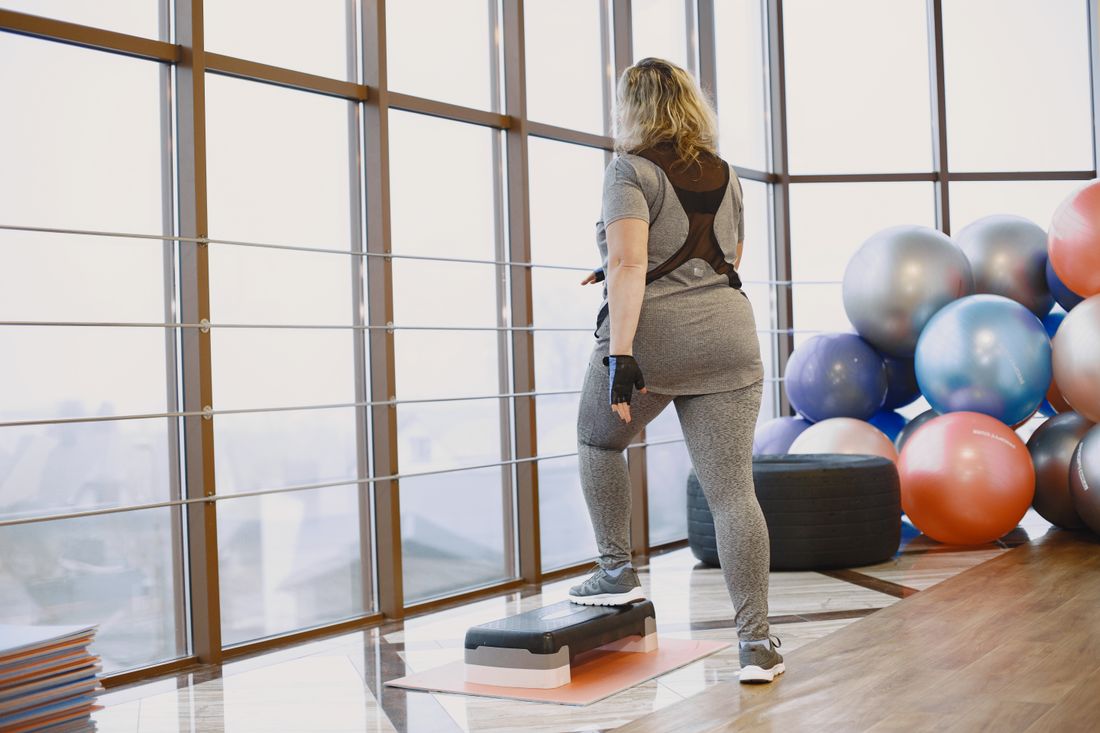
Balance in step aerobics does not mean remaining perfectly still on a platform. Every rise, return and direction change asks the body to reorganise its relationship with support. This article for Gizem Köymen explains centre of mass and base of support within real movement. It considers where the body is travelling and what information is available, rather than looking only at the order of the feet.
The base of support keeps changing
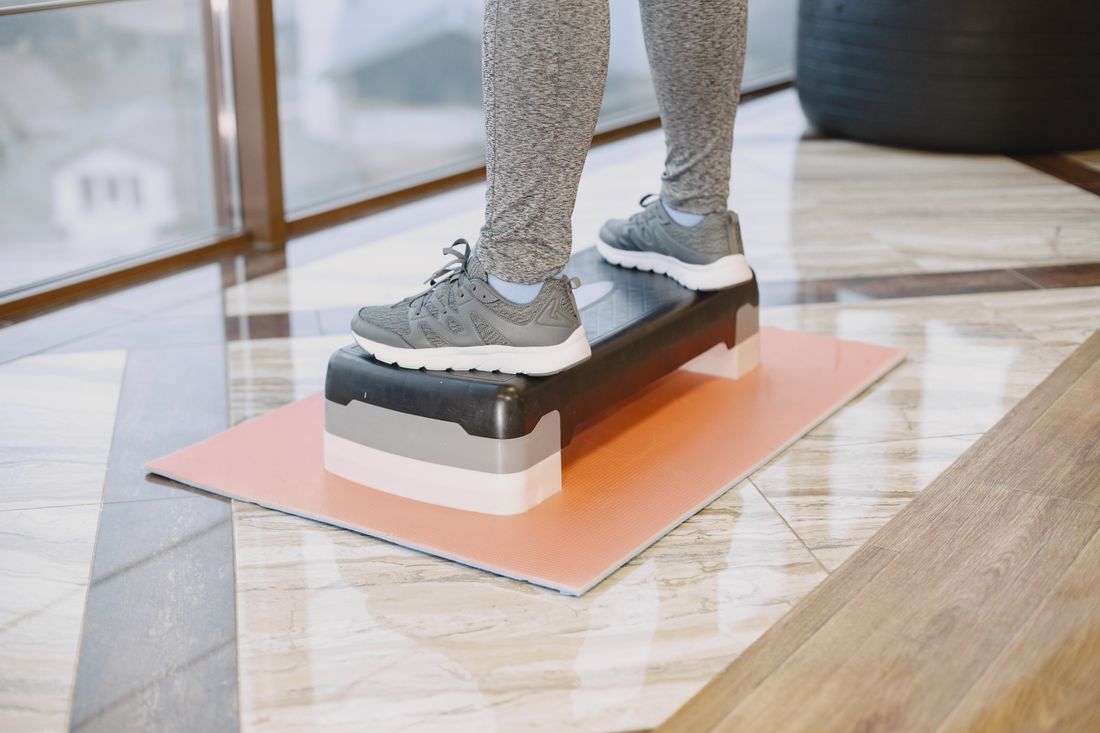
For a stationary body, the base of support can be described through the area formed by its contacts with a surface. Two grounded feet, one supporting foot and a foot on a platform create different relationships. Step movements continuously change those contacts. A stable-looking moment does not guarantee that the next transition presents an identical task.
With the floor and platform at different levels, a simple shape drawn between the feet does not fully explain the task. The source of force, body height and preparation of the next contact also matter. Touching a surface and transferring weight onto it are not necessarily simultaneous. An instructor therefore observes the transition from contact to load, rather than only the finished position.
Centre of mass needs a movement context
The centre of mass represents the distribution of body mass mechanically. Arm position and trunk movement can change its location. Its relationship to support helps explain stationary balance, but looking only at its projection toward the floor cannot fully describe stepping. The body's speed and travel direction also influence how the next support will be used.
Momentum relates mass to velocity. Changing direction while the body is already travelling requires the existing movement to be managed. A faster transition may leave less time for that change. This does not automatically make the task a better balance exercise. Reducing speed or simplifying the pattern can make the relationship between slowing and moving again easier to understand.
A turn involves more than the trunk
Facing a new direction does not guarantee that the feet and whole body have reorganised appropriately. Moving the trunk rapidly while a foot remains fixed changes the relationship between body regions. The supporting foot, contact phase and sequence of a turn should therefore be explained. Copying the instructor's final facing direction is not enough; the beginning of the transition matters too.
A new turn can be introduced separately from a familiar stepping pattern. This clarifies its effect on the leading foot, platform distance and return location. A simpler option may be appropriate while a direction change is unfamiliar.
Spatial awareness includes usable room
The front, back and sides of a platform can become different movement targets. Understanding them requires more than knowing where the body currently stands. The next foot destination, platform edge and clear floor space must be considered together. Changing step distance also changes the area occupied by the movement.
Other participants form part of the environment in a group class. Wider arm actions and sideways steps require awareness of neighbouring platforms. If space is insufficient, trying to concentrate harder is not the only answer: layout or movement options need adjustment. Clear movement paths and the absence of loose objects belong to preparation, allowing attention to focus on the class rather than avoiding obstacles.
Vision and body-position information cooperate
Vision helps identify the platform and surroundings. Sensory information from muscles and joints contributes to understanding body-segment position. Looking permanently down may hide surrounding cues, while looking only ahead may make an unfamiliar placement harder to recognise. How the gaze accompanies the task should reflect the class and individual needs, rather than one compulsory viewing point for everybody.
Counting music, remembering a new direction and adding wide arm movements can divide attention. Confusing the steps does not automatically demonstrate poor balance; the information demand may have increased. Removing one layer can make the difficulty clearer. Reducing visual support, such as by closing the eyes, should not be added merely to appear advanced or treated as an automatic progression.
Observe the quality of transitions
Repeated corrective steps after a turn, searching for an edge or using large trunk movements to regain the rhythm can prompt reassessment. Fatigue, understanding of the explanation and environmental conditions also deserve consideration. Describing the particular transition and timing to Gizem Köymen can provide more useful feedback than simply reporting that balance is poor.
Progress may mean completing a familiar change more calmly rather than adding more turns. Returning to a basic pattern, pausing and asking for clarification belong to control. Dizziness, sharp pain or marked loss of orientation should not be treated as an ordinary coordination test; activity should stop for appropriate assessment. Dynamic balance means reading changing support and preparing the next connection, not freezing movement.